|
0 Comments
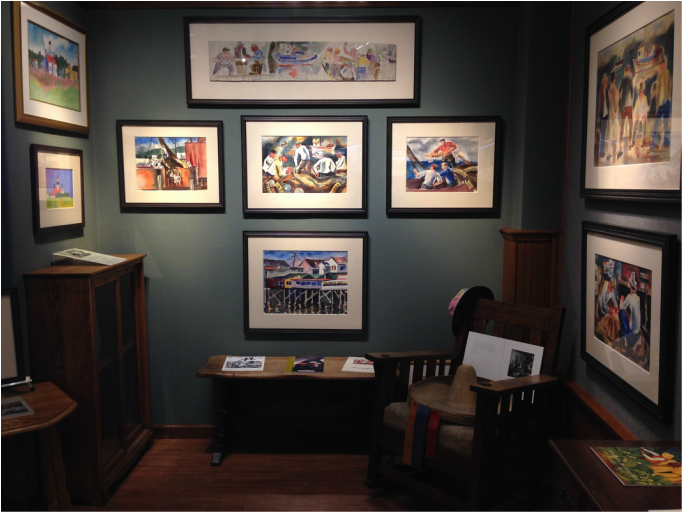 The Trotter Galleries have recently devoted a substantial amount of space in their Pacific Grove gallery (301-303 Forest Avenue) to a special installation of Sam Colburn's work. The installation includes items from Colburn's studio home, which was a rustic cottage set in the dunes off of Asilomar Boulevard, one block north of the Asilomar Lodge.
Great New Sam Colburn Carmel Valley Scene Surfaces, Found in a Remote Storage Facility, circa 1950s7/6/2016 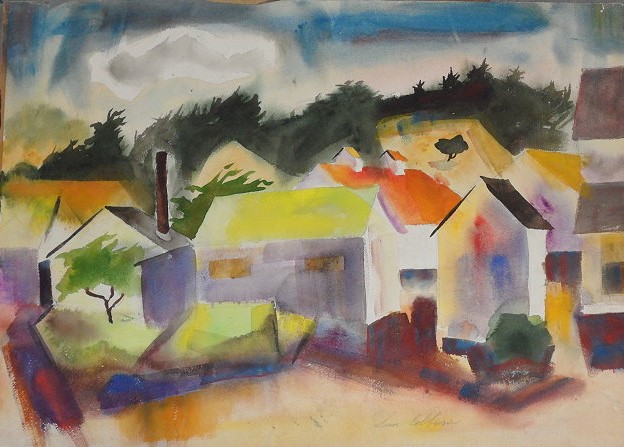 Wikipedia has just posted this entry for Sam Colburn!
Samuel Bolton Colburn (1909 Denver, Colorado - 1993, Pacific Grove, California) was an experimental artist, evolving a modernist approach to landscape and genre scenes during the Depression era. In the 1930s California became known nationally for its Regionalist painters like Colburn, who depicted urban and rural views of native life. These artists’ preferred medium was watercolor and they worked quickly outdoors on location developing a painting style that was spontaneous, gestural and raw.[1] While most American Regionalists worked in a realistic manner, Colburn liked to experiment with the lessons of modernism. Like the East Coast modernist John Marin, who was a major influence on the artist, Colburn continually searched for a direct freedom of expression. The San Francisco critic Alfred Frankenstein credited Colburn with a sense of drama and “as fine an eye for the subtleties of watercolor as this country has produced since Marin’s heyday.”[2] Colburn grew up in Glendale and Long Beach and studied geology at the University of Southern California. After graduating in 1932 he spent a year in Europe traveling and studying art. Upon his return to Los Angeles, he studied with Don Graham at [[Chouinard Art Institute]]. In 1937 he moved to Carmel, where he became a member of the Carmel Art Association three years later[3] The Monterey Peninsula provided the perfect cultural climate for the development of Colburn’s art. At the time, the prominent artists Armin Hansen, William Ritschel, Paul Whitman, August Gay, and Louis Siegriest were present in the area and provided valuable friendship and advice; the writer John Steinbeck, poet Robinson Jeffers and photographers Edward Weston and Ansel Adams were also close friends.[4][5] Salvador Dalí, who lived in Pebble Beach during the 1940s,[6] attracted other important European modernists to the area including Fernand Leger, with whom Colburn studied in 1941.[7] Colburn's portrait of Jeffers is on the cover of the 1963 Vintage paperback edition of Robinson Jeffers: Selected Poems. Sam at work in his Carmel, California home-studio in 1962.For many years, Colburn lived in Carmel, in a large house which was a center for local bohemian activity, playing his violin during late night drinking parties and living mainly off an inheritance, which eventually gave out. Later he lived in a sheltered cabin called Stag’s Retreat in the beachside Asilomar woods, across from the last remaining sand dunes in the area.[8] Something of a local legend on the Peninsula for his acerbic wit and eccentric character, Colburn was an active member of the artistic community, teaching, writing art criticism for The Carmel Pine Cone, executing public murals, and exhibiting in galleries and museums throughout California, Colorado, and New York. Colburn gained his substantial reputation as a watercolorist and for his early paintings of the Monterey Peninsula in Northern California. He depicted the fisherman and activities around the wharf and in the canneries, and the hills and farm buildings around Salinas and Carmel Valley. In Colburn’s early landscapes, he is interested in structure and composition, trying to capture the essence of a scene with a Cezannesque interest in reducing volumes to shape and color. His early figural works of Monterey fisherman at work in the sardine canneries made famous by John Steinbeck, reduce the figures to blocky forms in the manner of Diego Rivera. Colburn’s later nudes, still lifes, and landscapes, made when the artist was in his eighties, are elegant, and entirely loose and expressive. The artist developed a vision of his own through the years, directly transferring his feeling for nature and the moment to the viewer. References[edit]
Carmel Art Association lands a traveling exhibition at The Grand Central Galleries, New York in 1946. NY Times critic Howard DeVree singles Sam's work out as well as the artist Gene Frances, Elwood Graham and Andre Moreau. 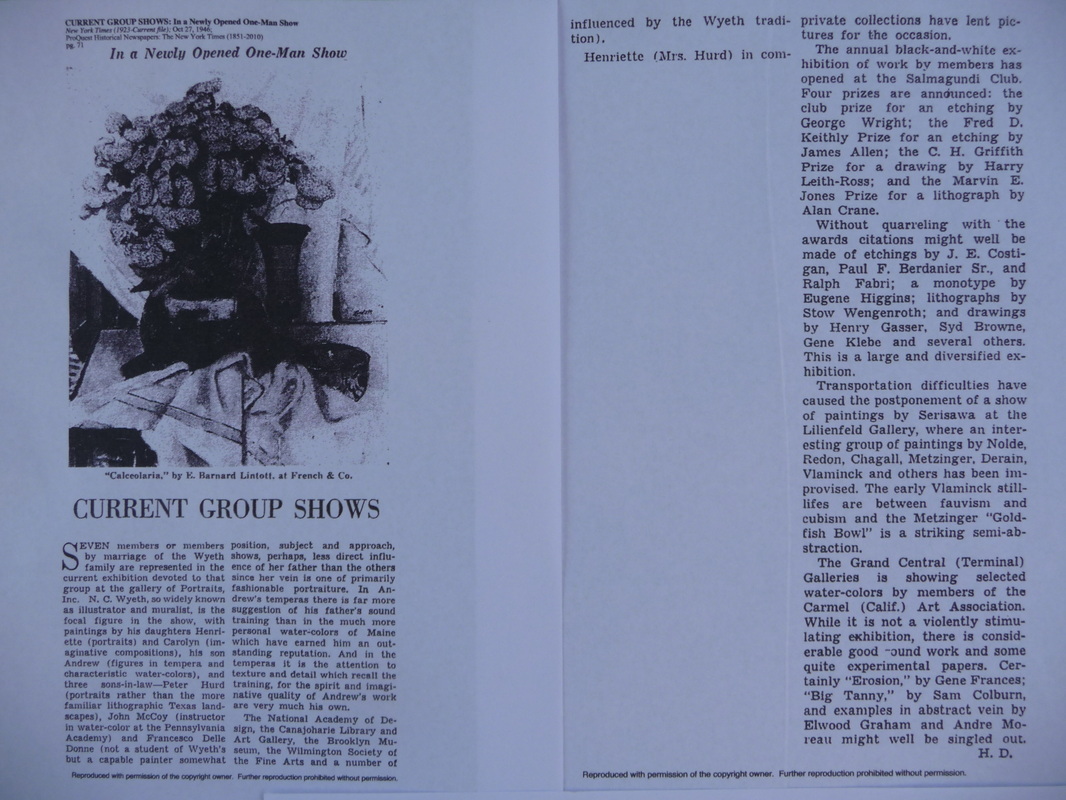
The tradition of bohemianism in Carmel is a long one and Sam's bohemianism was never in question. This April 2, 1992 Carmel Pine Cone article in Barbara March's Coast & County section reports on Sam's last big birthday bash when he turned 83. Attended by Robert Smith, Jean Draper, Donna Woods, Lillie Smith, Jerry Hastings, Jane Dunaway, Cyrus Colburn, and Heather Johnson-Spiegel. Bohemianism is a term also applied other artists/writers/etc. from Carmel including George Sterling, Mary Austin, Jimmy Hopper, William Ritschel, Armin Hansen, Robinson Jeffers, Jack London, John Steinbeck, Mary De Neale Morgan and Jessie Arms Botke. 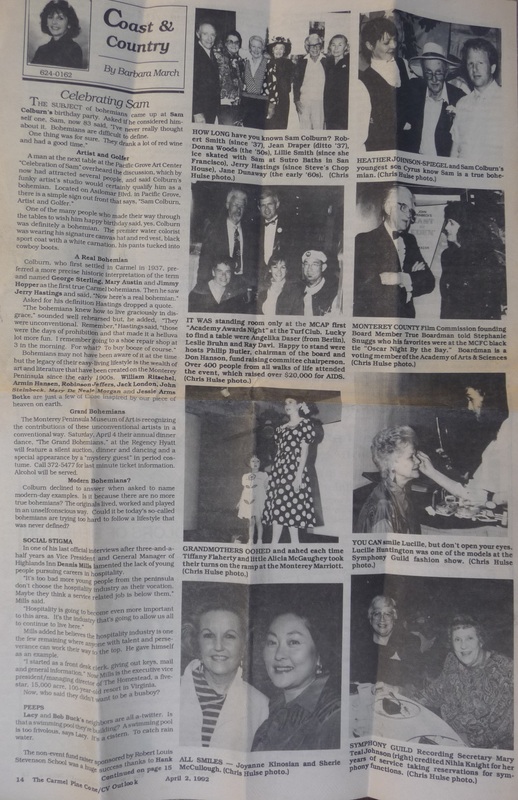
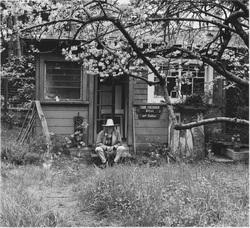 Naomi Reddert's photograph of Sam during his last years on Asilomar at his very rural retreat a half-block from the Pacific. One of the last Bohemians.
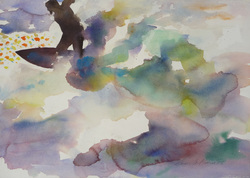 Sam became interested in surfing as subject matter in the 1970s. The fluidity of the watercolor medium was a good match for the action of this water based sport. In addition, by the 1970s his sons were actively involved surfers which provided him some insight into the sport. Sam did a very small number of surfer painting, probably 10-12, all painted over the span of a few years.
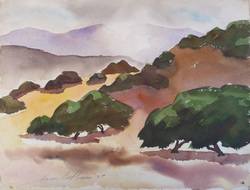 A series of four paintings by Sam Colburn of Carmel Valley in 1937 were just discovered. These paintings are the earliest landscapes of the area known to exist by the artist. Colburn moved to Carmel that same year and continued to paint Carmel Valley for the next fifty years.
In 1937 Robinson Jeffers completed Solstice and John Steinbeck’s Of Mice and Men had just been published. 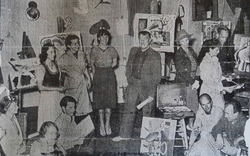 Carmel in the 1930s through the 1960s was home to a remarkable group of writers, photographers, and painters. All of whom rubbed shoulders in the small town. Many of them left a lasting impression on Sam including painters Salvador Dali and Fernand Leger (whom he had classes with in 1941), photographers Edward Weston and Ansel Adams, and writers Robinson Jeffers and John Steinbeck among others.
|
Archives
July 2016
Categories
All
|
 RSS Feed
