In 1937 Robinson Jeffers completed Solstice and John Steinbeck’s Of Mice and Men had just been published.
.
| Sam Colburn Artist |
|
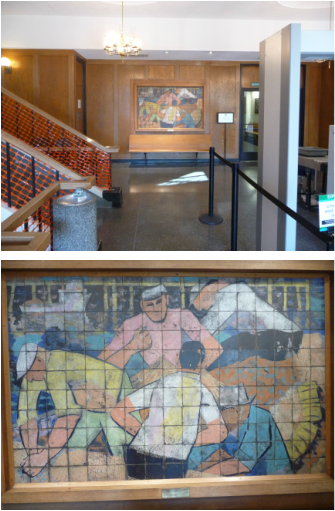
A series of four paintings by Sam Colburn of Carmel Valley in 1937 were just discovered. These paintings are the earliest landscapes of the area known to exist by the artist. Colburn moved to Carmel that same year and continued to paint Carmel Valley for the next fifty years. In 1937 Robinson Jeffers completed Solstice and John Steinbeck’s Of Mice and Men had just been published.
0 Comments
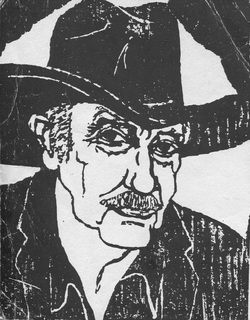
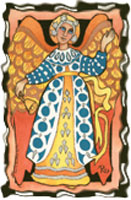
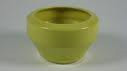
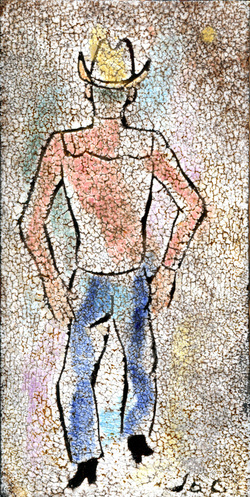
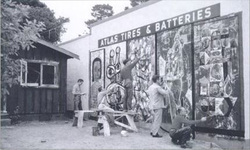
Carmel in the 1930s through the 1960s was home to a remarkable group of writers, photographers, and painters. All of whom rubbed shoulders in the small town. Many of them left a lasting impression on Sam including painters Salvador Dali and Fernand Leger (whom he had classes with in 1941), photographers Edward Weston and Ansel Adams, and writers Robinson Jeffers and John Steinbeck among others. “In October 1952, artists (from left to right) Larry Lushbaugh, Jay Hannah, Sam Colburn, Dick Lofton, and Ellwood Graham put finishing touches on five abstract murals on the back wall of a service station facing Sixth Avenue. The colorful—and highly controversial—15-foot pieces lasted only 18 months. Joe Kline, of Kline Electronics, “worried about the moral fiber of our American way of life” and “this monstrosity called modern art,” painted them out. (Photograph by Arthur McEwen; courtesy Alan McEwen collection.” Monica Hudson, Images of America, Carmel By-the-Sea, page 81 This woodcut print by Mary Burr of Sam Colburn, probably done in the 1970s, was just discovered in the Colburn Family Archive. Sam used it on this cover of his publication Tales from the Taxicab. It was also used on an invitation to a posthumous evening gathering at the Carmel Art Association titled Remembering Sam in 1994. Here is Mary Burr's AskArt biography submitted November, 2004 by Gary Stanley / ArtSanDiego. It is compiled from Carmel Art Association references. Mary Burr began painting early in her career. She is known for her modernist / expressionist landscapes, still life and figurative works. As a dancer, she danced for the San Francisco Ballet, the American Ballet Theatre, and then several Broadway musicals. She toured the United States and throughout Europe during her dancing career. Burr came to the Monterey Peninsula from New York with her family. It was here she began giving serious attention to her artistic career. She spent over 20 years in the graphic arts business. Mary Burr studied at the Monterey Peninsula College, with Jon Corino at the Art Students League in New York, at the Art Institute of Chicago School, and studied with Victor di Gesu, longtime Monterey Peninsula artist and husband of artist Janet Ament de la Roche. Mary Burr has been an Artist Member of the Carmel Art Association since 1989. Her works are held in collections nationwide, and throughout Europe. She has had works in the personal collections of the late Bob Fosse, Yul Brenner, and Director David Mann. Her works have been exhibited at the Pacific Grove Art Center, the Carmel Art Association Gallery, and at various venues throughout the Monterey Peninsula. She has served on the Board of Directors of the Carmel Art Association. Greg Minshall mentioned Carmel artist Erica Franke in reference to his Dad and supplied this link: Monterey Public Library Blog DECEMBER 1, 2006Monterey's Christmas Angels Monterey's six-foot tall Christmas angels are now aloft, decorating lampposts and City buildings around town - including the Library. The angels were originally commissioned in 1956 by the City of Monterey to brighten up the downtown area during the festive season. The artist, Erica Franke, worked under the direction of a committee of downtown merchants, earning a commission of $12 per angel. The angels were immediately controversial. Many people didn't like their dark complexions and dour expressions. Franke defended the angels, which she said were inspired by Spanish representations of angels in early California. In the years immediately following the unveiling of the angels, the annual controversy resulted in a series of changes. A bit of color was added here and there to brighten the angels, and in 1959 tinsel and pieces of shiny aluminum were added to give them a shimmering effect. Over the years, the angels became faded and battered, and in 1971, the City disposed of most of them. The few that were still in fair condition were auctioned off, fetching prices between $75 - $100. In 1972, Erica Franke (Haba) was commissioned to create 40 new angels. The new angels were similar in size and design, but the colors were lighter and brighter. When they were unveiled in 1973, they provoked criticism from those who had grown to love the original angels! Whether you like them or dislike them, the Monterey Christmas angels are a Monterey institution. Drop by the Library during the month of December and check out the lobby display about the history of the angels, complete with news clippings Glenn's son Greg just posted corrections and more information on his father. Glenn's work is in the Wisconsin Historical Society Collection. The WHSC website has photographs of the work and a biography worth checking out--to the right is one of the Glenn's bowls in the WHSC collection. Here are additional comments by Greg: "if you're interested in non-Sam collaborations (but with *my* father, of course :), if you're in Carmel, there's a building on the northwest corner of 6th and Dolores ("Gallery North" occupies the corner space). if you walk around *behind* the building, through a little passage way running south-north off 6th street, there are two murals my father collaborated on. one is by Don Doner. the other by, off, Erica ???, the woman who did the Christmas angels that used to be on Monterey light poles when we were kids. (if i remember correctly, Erica's mother Mickey ??? ran a studio in the Carmel Arts and Crafts Center, now the Dowd Gallery or some such, where my dad showed/sold his work in the 60s.) cheers, Greg" It appears there was a fair amount of collaboration between artists in Carmel from the 1940s through the 1970s. This recently discovered cowboy tile by Sam Colburn was the product of a collaboration with the local Monterey ceramic artist Glenn Minshall. Glenn was important for a number of reasons, one being that he developed his own glazes from the rocks and minerals found locally. Glenn supplied Sam with glazes, showed him how to use them, and sometimes assisted him in producing large projects, including ceramic mural commissions. Cowboy tile is a 12 x 6 x 1/2 inch glazed tile. |
Archives
February 2026
Categories
All
|